Public-Private engagement
The Crucial Interplay between Public and Private
Policies directed towards our industry are intended to provide confidence in a safe and secure animal food supply chain.
Ultimately, well-designed policies and regulations set the foundation for strong markets: creating confidence, security and a level playing field.
They can also address issues that the private sector cannot solve due to profit requirements. For example, maintaining legal systems or roads.

Ultimately, well-designed policies and regulations set the foundation for strong markets: creating confidence, security and a level playing field.
of IFIF 2025 stakeholder survey respondents perceive cost increases as the highest barrier to sustainability.
But the perception may be a higher barrier than actual costs.
pain before gain
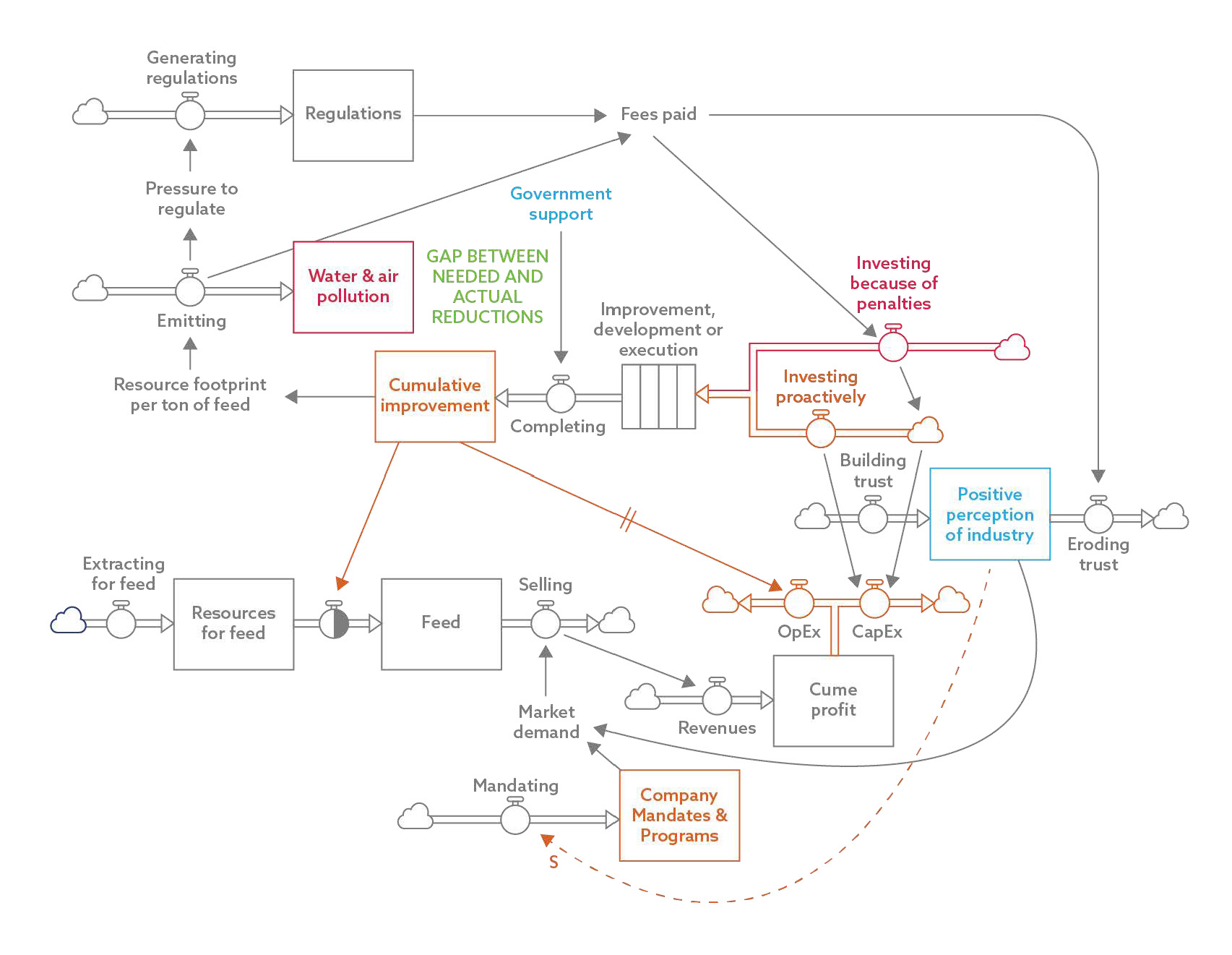
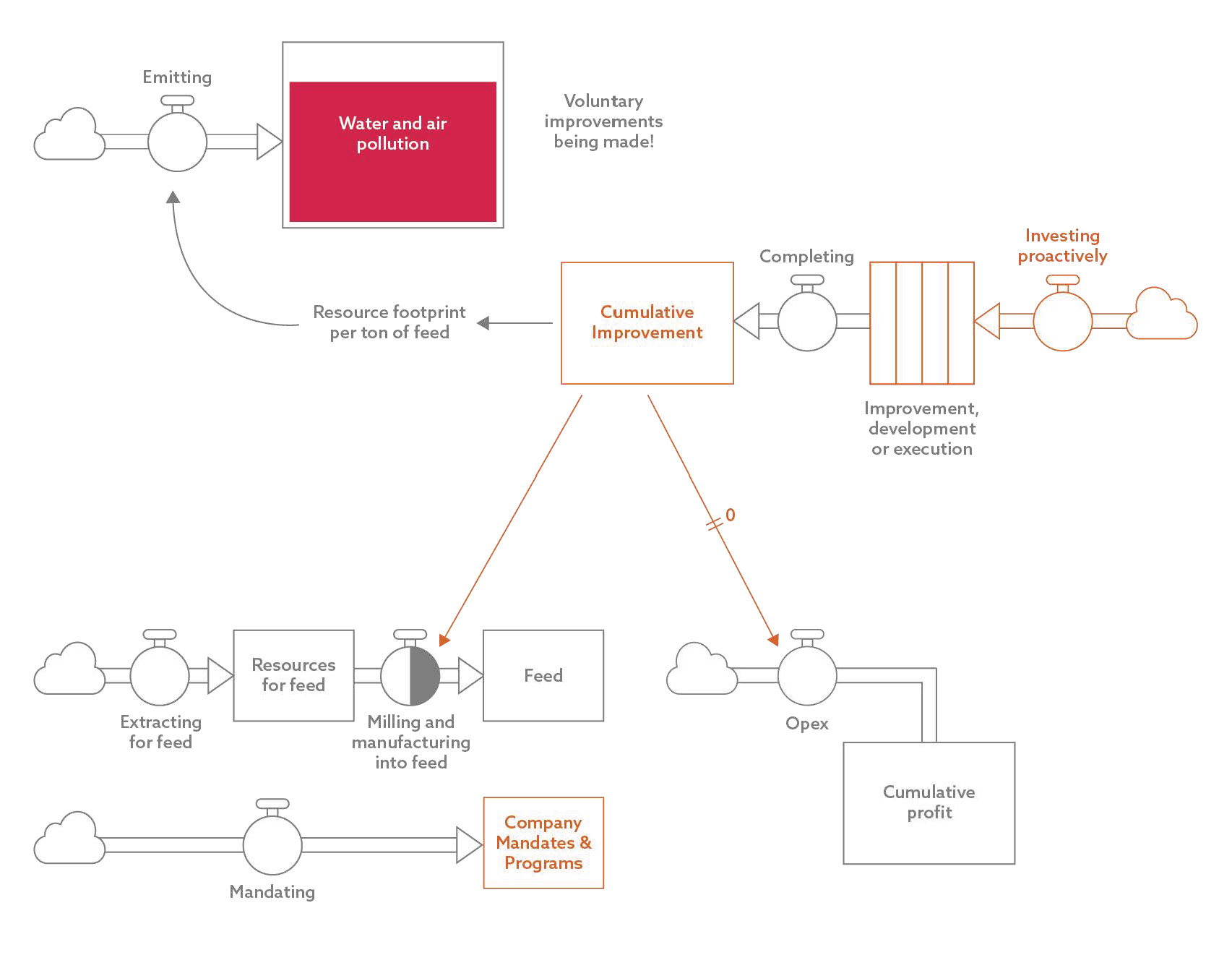
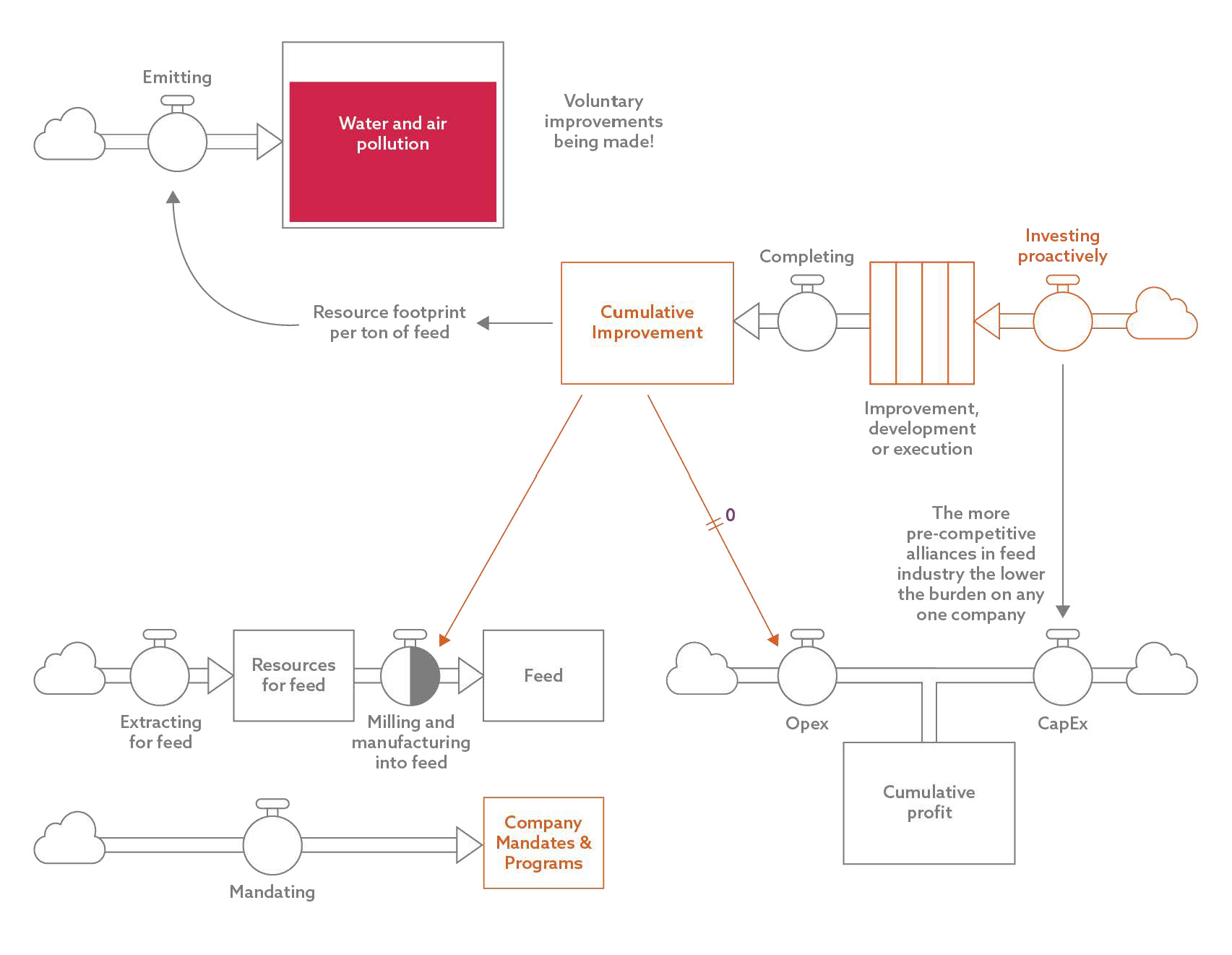
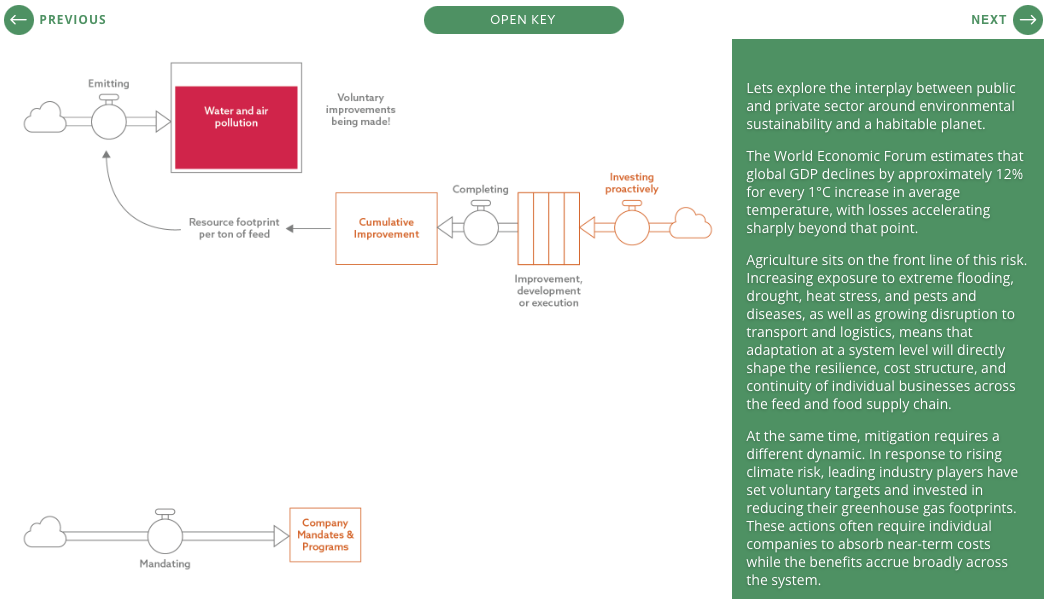
Good policies can give strong market guidance that helps our industry overcome a significant systemic barrier, one that we all experience in our own personal lives. That barrier is that, to make things better in the medium and long-term, short-term investments are often required ('pain before gain').
Because regulations drive pre-competitive action, they can ensure that no single company bears the brunt of costs that will help themselves and the whole industry be more resilient and profitable over time (along with helping all people and communities).
Many inconsistent policies can, however, create barriers and inefficiencies within a global animal food supply chain.
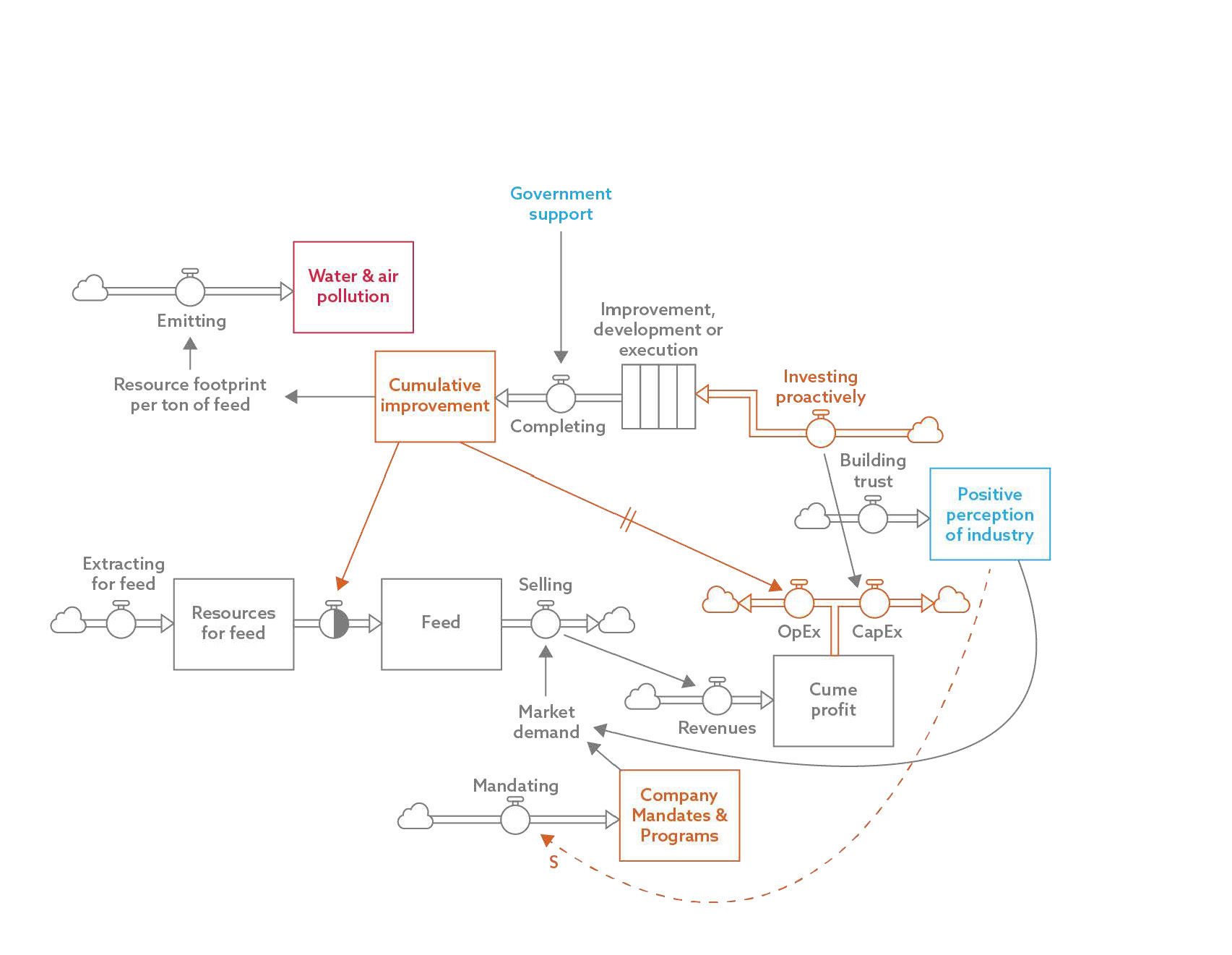
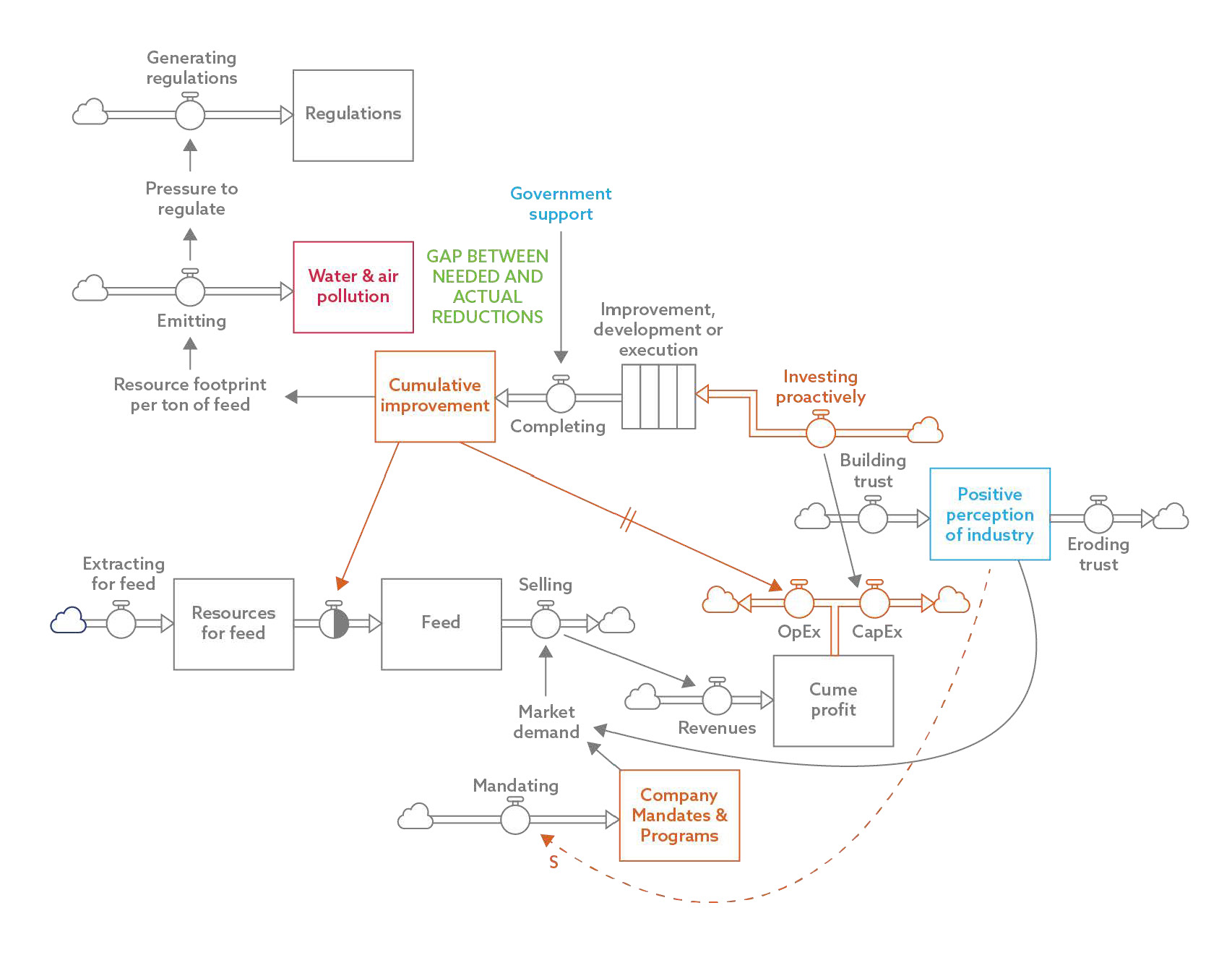
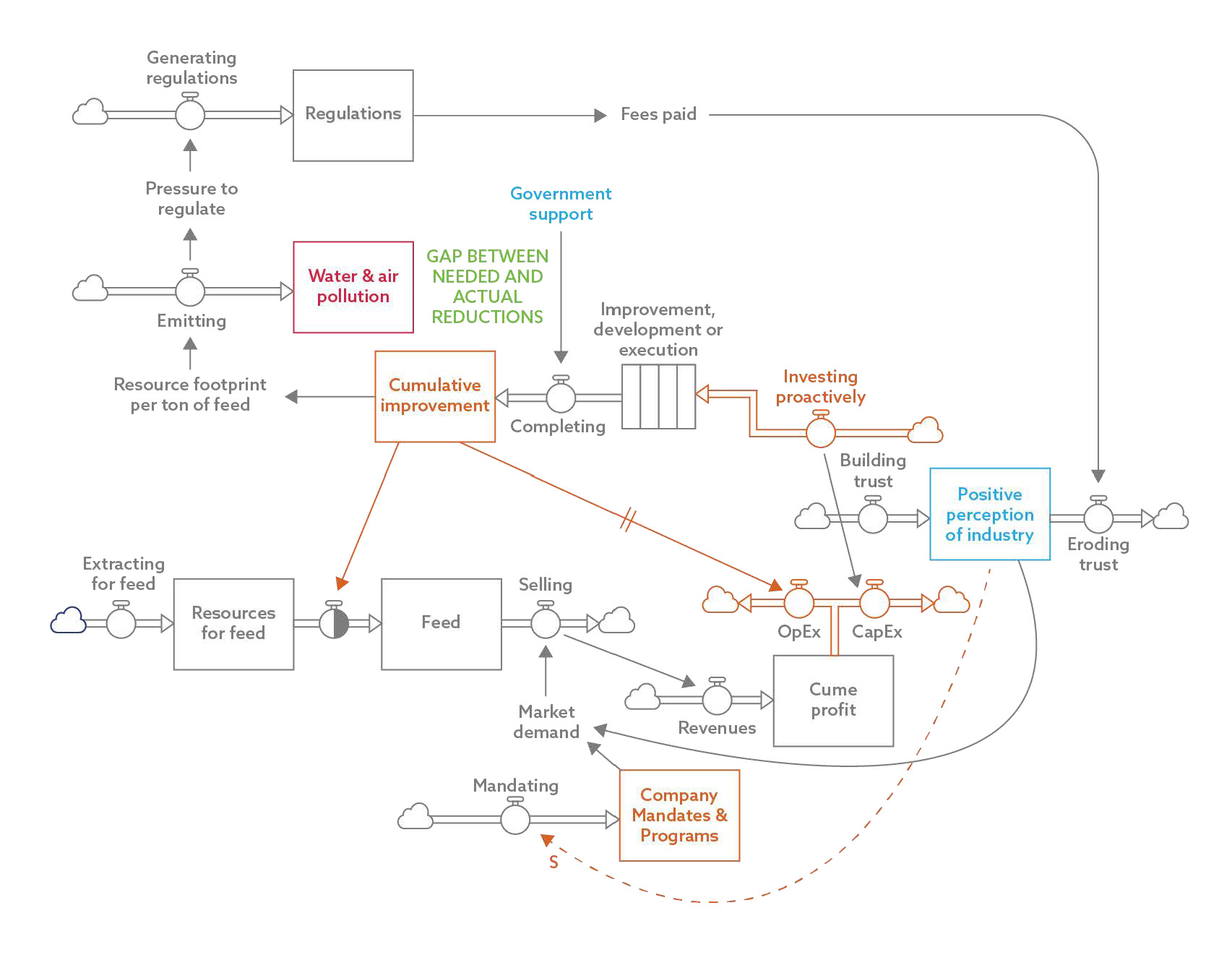
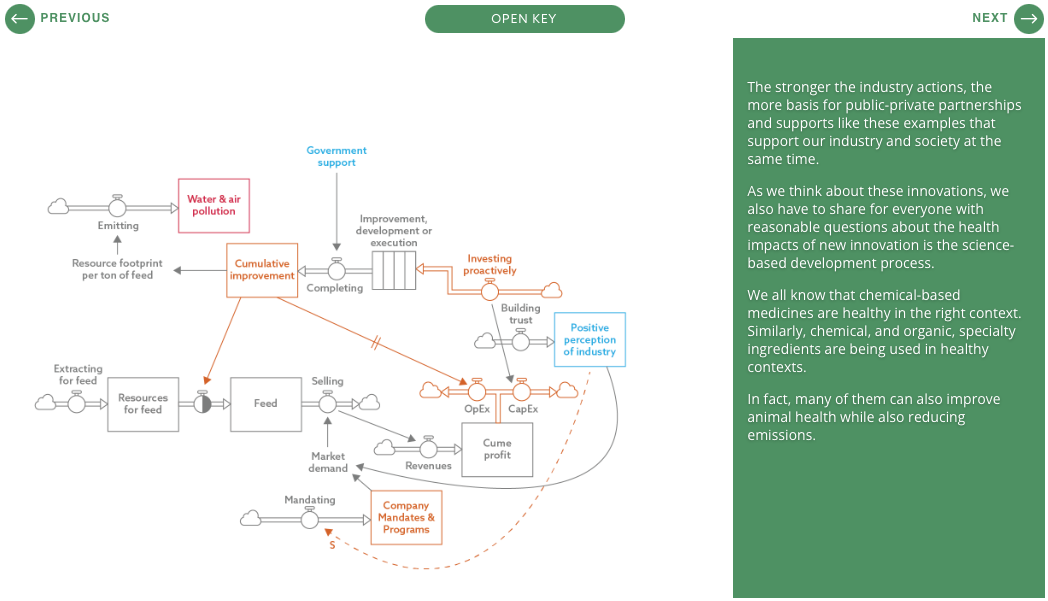
System Map
Public-Private Engagement:
Driving Good Sustainability Actions
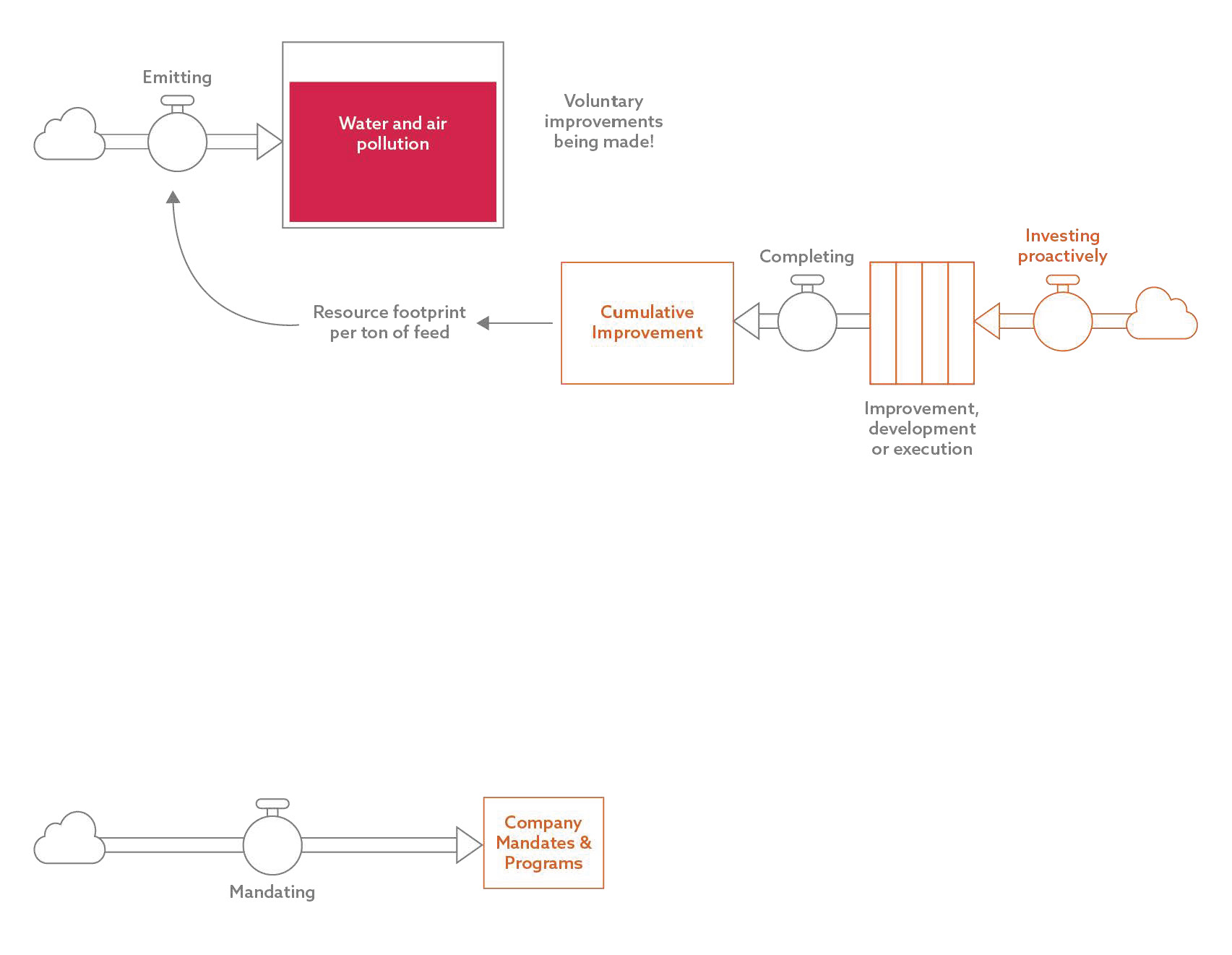
Shared Public-Private Mandate
Across Belgium, Denmark, and South Korea, public–private partnerships are driving science-led improvements in the sustainability of the animal feed industry.
In Belgium, collaboration between feed producers, livestock companies, and public research institutions is advancing precision nutrition, circular feed ingredients, and emissions-measurement frameworks that support both environmental performance and competitiveness.
South Korea is similarly leveraging coordinated action between government, academia, and industry to accelerate innovation in low-emission feed technologies, data-driven feeding systems, and scalable sustainability standards suited to high-intensity production systems.
Denmark provides a complementary example, where a methane-reducing feed additive has been implemented through cooperation between a major dairy company, farmers, and government cost-sharing mechanisms.
This public-private alignment supports market access, mitigates regulatory risk, and creates new value streams for feed innovations that reduce methane emissions.
Incentivising Cow Methane Reductions in Canada
We see another example using a different public-private mechanism in Canada. Under the Greenhouse Gas Offset Credit System feedlot operators can earn offset credits by implementing diet reformulation, improved animal management, or other mitigation strategies. Enteric fermentation in cattle is a significant methane source.
Feed companies supplying Canadian producers have benefit from this shift, aligning service offerings, ration formulations, nutrient efficiency, and emission mitigation measures with governmental frameworks.
Interestingly, the specialty feed ingredient from the previous example was only approved to qualify for offset credits in 2024. This highlights that regulatory barriers can block important sustainability innovations if they don’t keep pace with innovation.
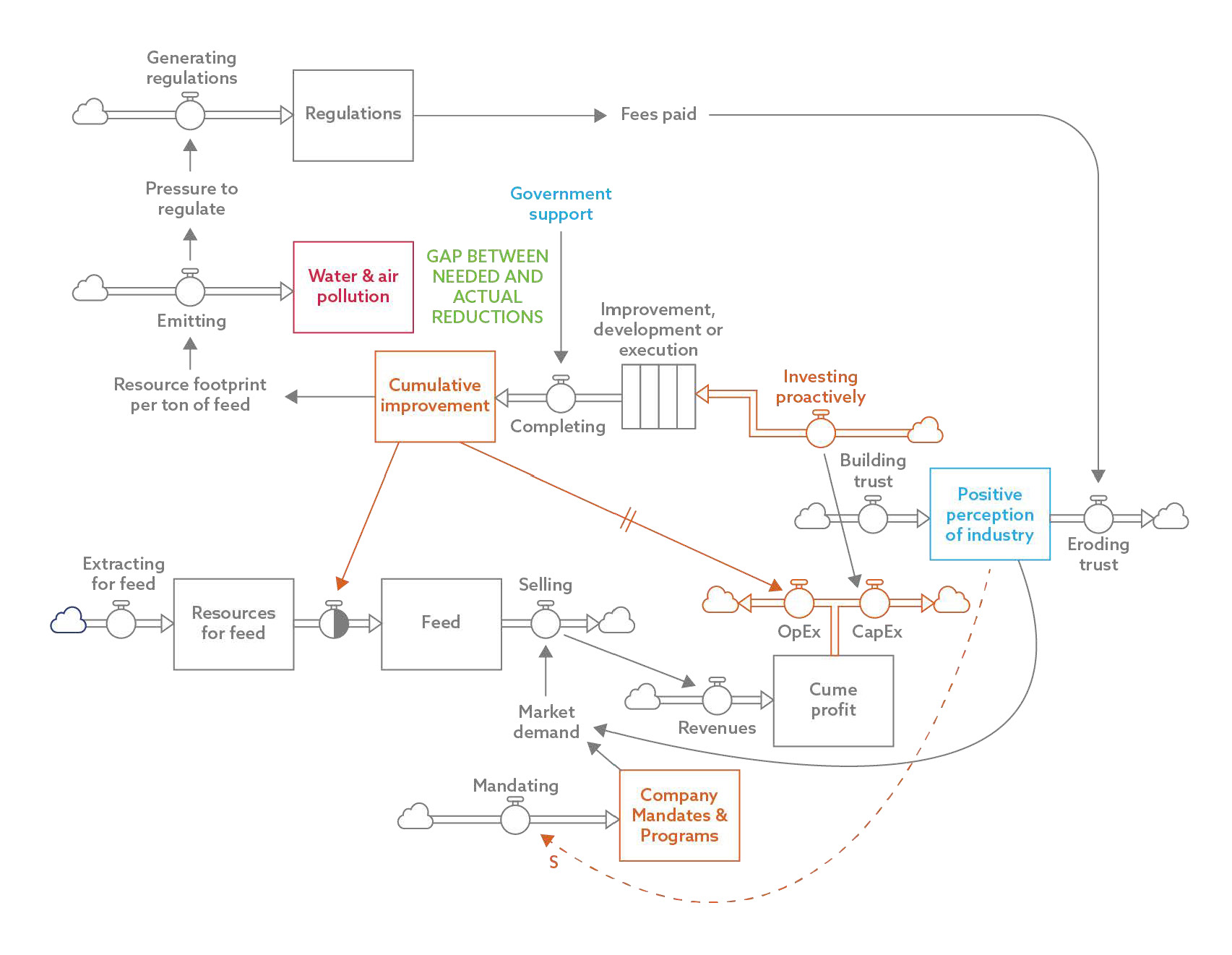
System Map
Public-Private Engagement:
Walking the Road to 2050 Together