FEED CHALLENGES & OPPORTUNITIES
The global feed industry sits quietly at the heart of our food system, an essential link between the earth’s resources and the world’s nourishment.
More than 1 billion people rely upon livestock for their livelihoods. Milk and dairy products, meat, and eggs play an essential role in nourishing people throughout their lives, especially those at risk of malnutrition. Sustainable production means ensuring these foods are available, affordable, and safe, and that those who produce them can earn a meaningful living.
Every day, feed companies help farmers do something both simple and profound: sustain feed animals to stay healthy, productive, and resilient. A healthy animal is a productive animal; one that grows efficiently, uses fewer resources, and stays protected from disease.

Healthy animals
mean less waste,
lower emissions, and safer food for people.
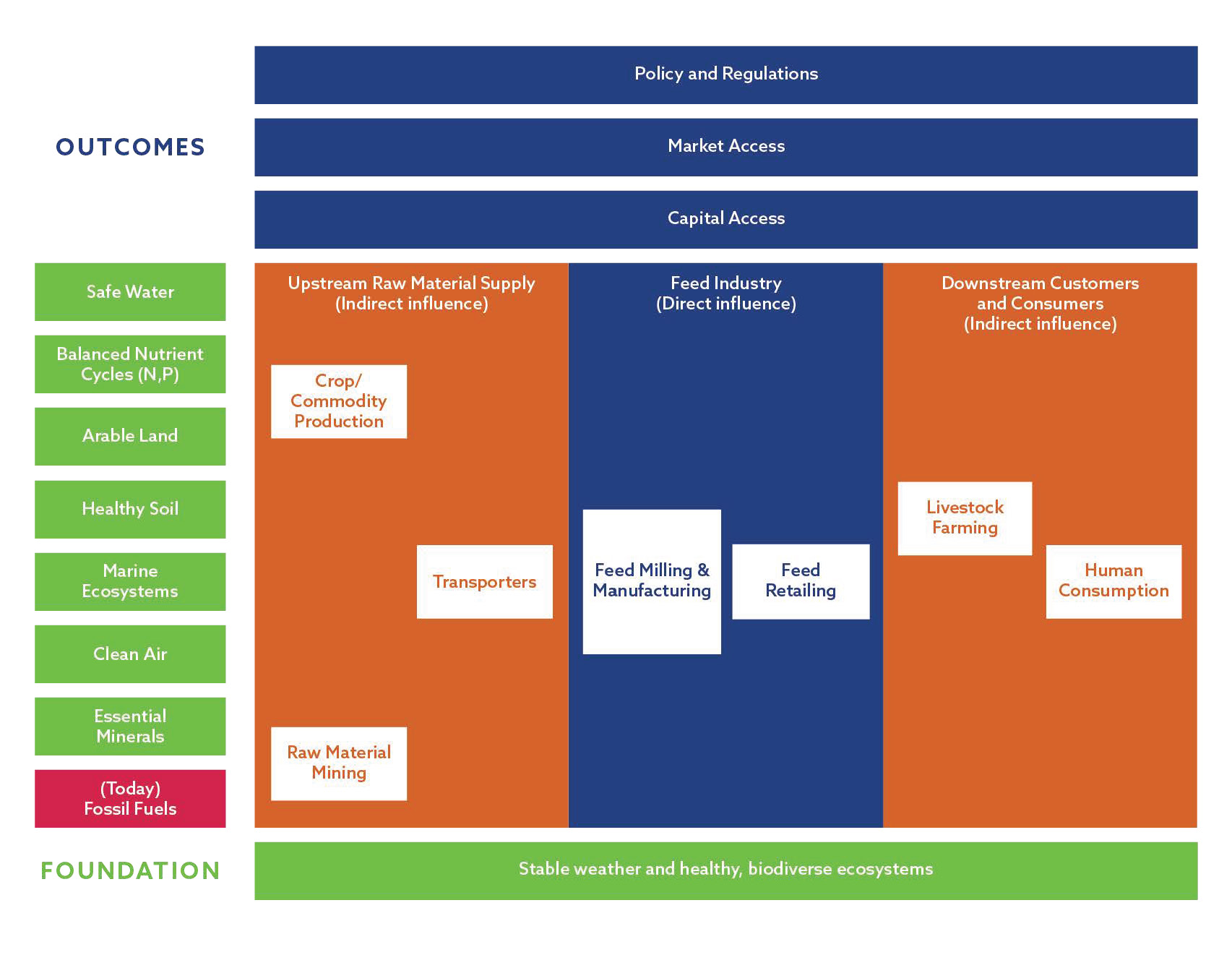
Our feed industry is at the heart of this wider food system
The feed industry has long been a pioneer in circular economy practices. Before the term even existed, they've been upcycling agricultural and industrial byproducts, rendered animal waste, almond hulls, cottonseed, citrus and beet pulp, into nutritious livestock feed.
According to the American Feed Industry Association, over 40% of feed ingredients come from industrial byproducts that would otherwise require disposal, preventing millions of tons of annual landfill waste. Circularity isn't a trend in feed; it's foundational.
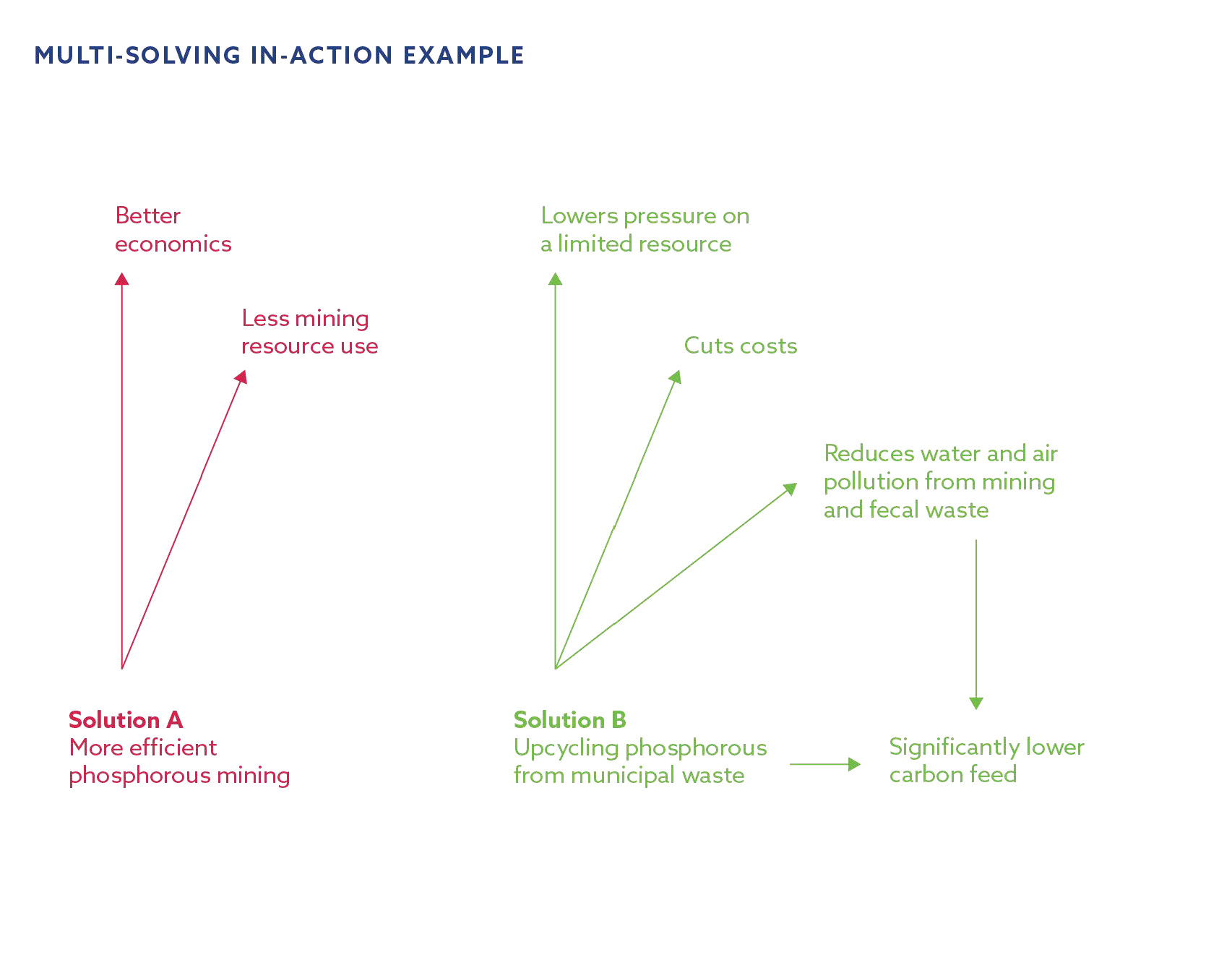
The next opportunity for the feed industry today is to 'follow the molecules' and identify new waste streams from other industries that it can upcycle, particularly where ingredients have a heavy water or fossil fuel footprint.
of feed ingredients used today originate from industrial byproducts that would otherwise need disposal.
A WORLD WITHOUT COWS?
As explored in the documentary, World Without Cows, agriculture is a vast complex system central to survival in all corners of the world. We see that farmers and ranchers aren’t just putting food in front of all of us; they are producing nutritional elements that bring more than food to the customer (i.e., use of co-products, fur, leather) and participating in a system with deep cultural and spiritual significance.
The diversity of that system spans nomadic tribes on shared grazing land to feedlots housing and finishing thousands of cattle. These different models and paradigms have very different impacts on communities, water, soil, land use, emissions… And there are as many different 'sustainability' definitions as there are farms.
Learn more about a World Without Cows in our Sharing Feed's Story case study.
Feeding the World
Today, we in the feed industry reliably deliver feed to nourish livestock efficiently. All while upcycling a range of waste streams.
We support human health and each other through crises, and we have even embedded some key sustainability principles into our businesses.
We face, however, mounting pressure: political and trade volatility, resource scarcity, extreme weather, more pests and diseases, and shifting expectations among policymakers and consumers.
The question is not whether change is required, but whether we will act proactively? So it can be on our terms.
THE CHALLENGES AND OPPORTUNITIES AHEAD
While we are a highly competitive market, our industry has unparalleled capacity for collaboration. That’s because, when it comes down to it, we in agriculture know what’s important.
A powerful example is a story from Canada, where weeks of climate change-driven flooding threatened lives and livelihoods.
As extreme weather made roads impassable, feed mills suddenly could no longer reach their customer farms. Instead of retreating into competition, mills across the region united, delivering to the farms they could reach, regardless of whose customer it was.
In solidarity, 'competitors' set aside business boundaries to ensure animals were cared for and farmers weren’t left behind.
This story reminds us that we could come together now to prevent crises in the future.
This story reminds us that we in the feed industry and agriculture know how to act as a community. But we tend to react, and the challenges our industry faces today require proactivity.
Click here to learn more about ongoing collaborations tackling key challenges.
FEED CHALLENGES AND OPPORTUNITIES