
ANIMAL HEALTH
Livestock health is critical for food safety, farm productivity, and climate resilience.
Healthy livestock grow more efficiently, require fewer resources, and produce lower emissions per unit of food. Good animal care supports farmer livelihoods and a safe, affordable supply of milk and dairy products, meat, seafood, eggs, honey as well as the myriad of non-food items made from livestock such as insulin.
Adequate nutrition aims at maintaining animals in good health, supporting their resilience to various stressors. Improving animal health through disease prevention, early detection, treatment of illness, alongside access to veterinary care, is central to achieving environmental and social goals.
Yet today, only 0.01– 0.02% of climate finance goes to livestock health, underscoring the need to align investment with impact potential.

Improving animal health through disease prevention, early detection, treatment of illness, alongside access to veterinary care, is central to achieving environmental and social goals.
PhytoComplexes are one example of what's possible when humans learn from natural wisdom.
SKRETTING’S PHYTOCOMPLEXES LEARNING FROM NATURE TO BUILD ANIMAL RESILIENCE
There’s a tension in modern animal production systems. On one hand, producers must deliver high performance and consistency under increasingly demanding conditions ranging from genetic intensification to climate-driven stressors such as rising temperatures and fluctuating oxygen levels. On the other, biological systems are inherently complex, adaptive, and sensitive to disruption. Solutions that focus narrowly on single causes or single compounds can struggle to deliver durable results in such environments.
Skretting’s advanced PhytoComplexes emerged from a different starting point: the recognition that nature has spent millions of years balancing complexity. In that balance is health, whether at an individual animal level or an ecosystem level.
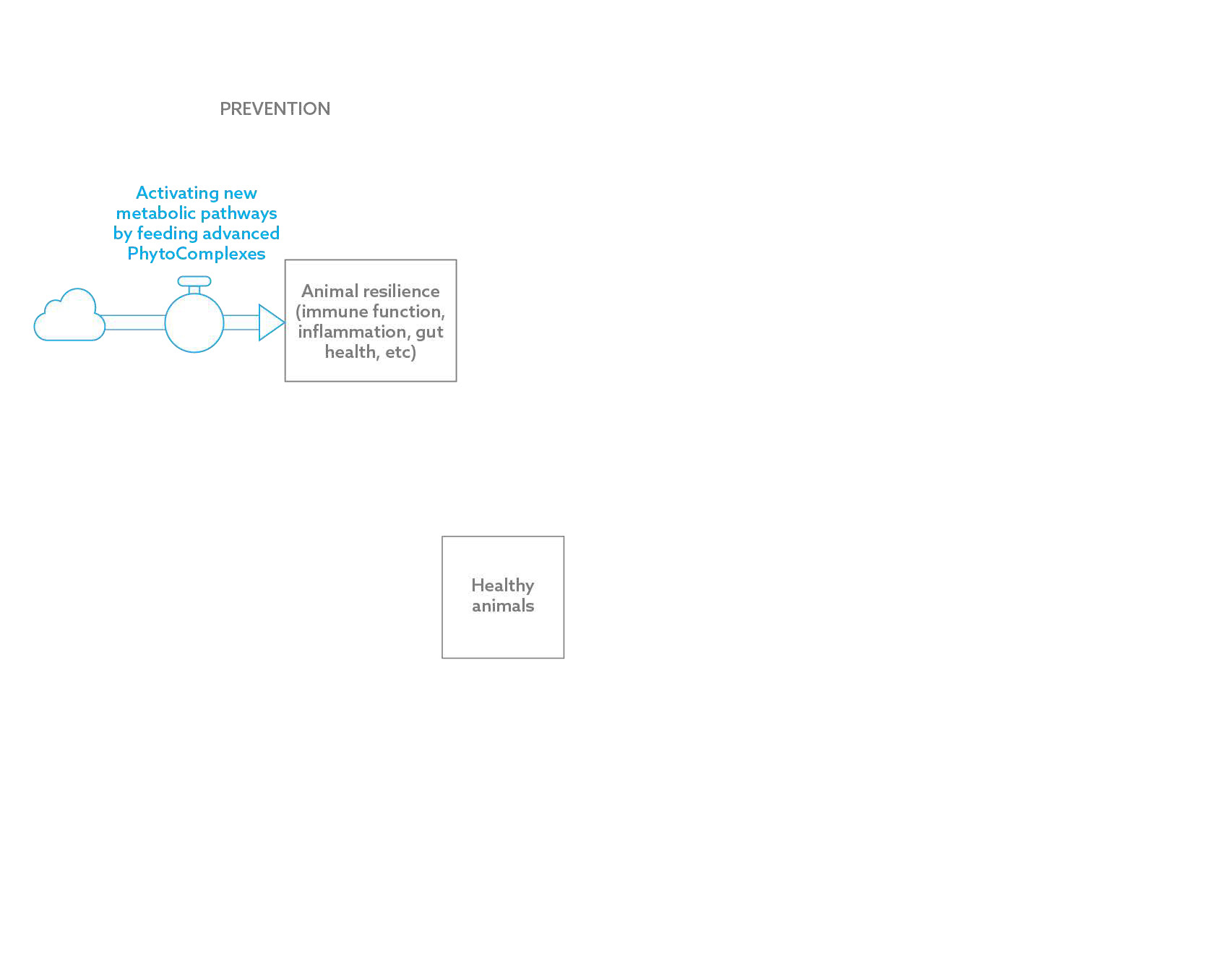
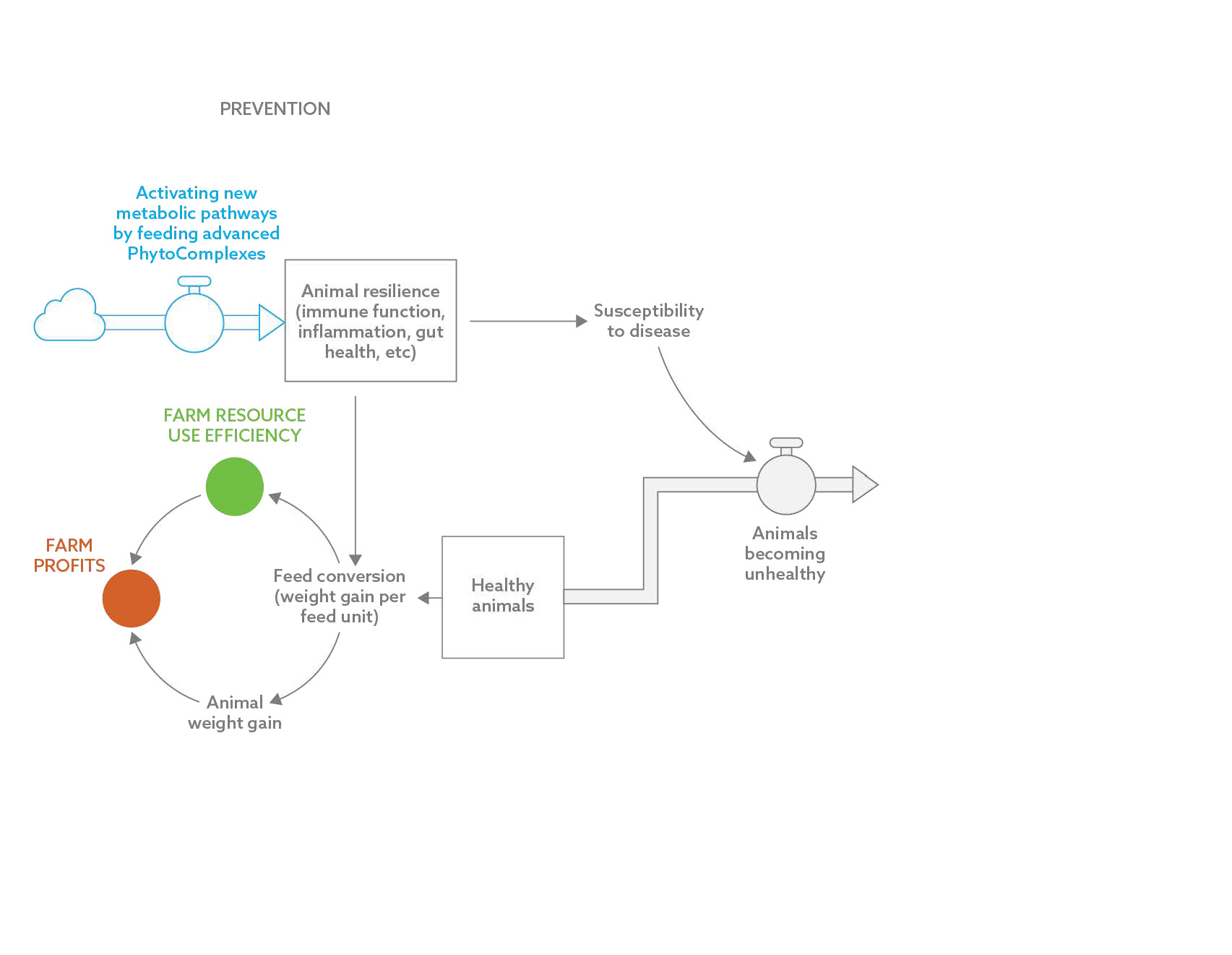
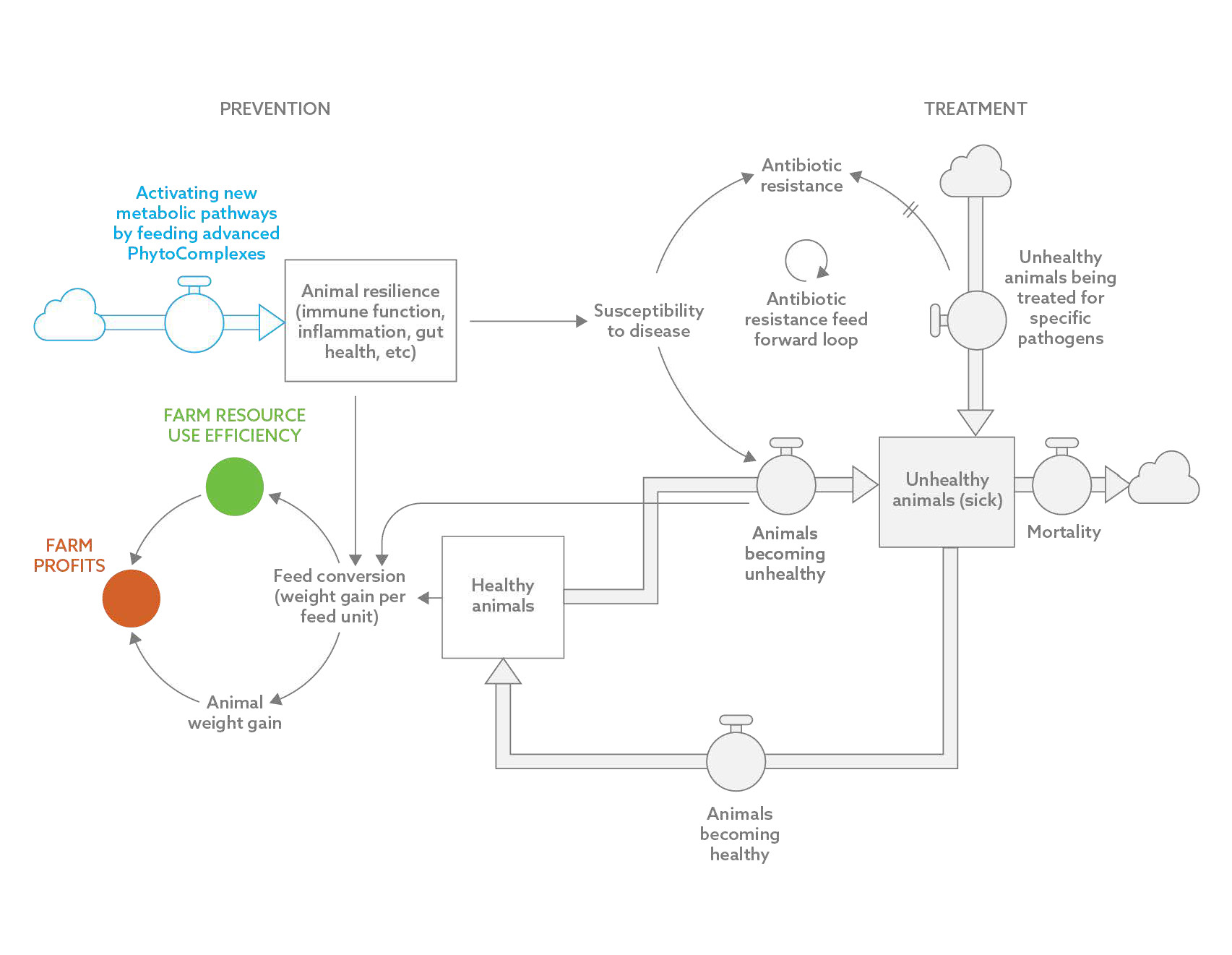
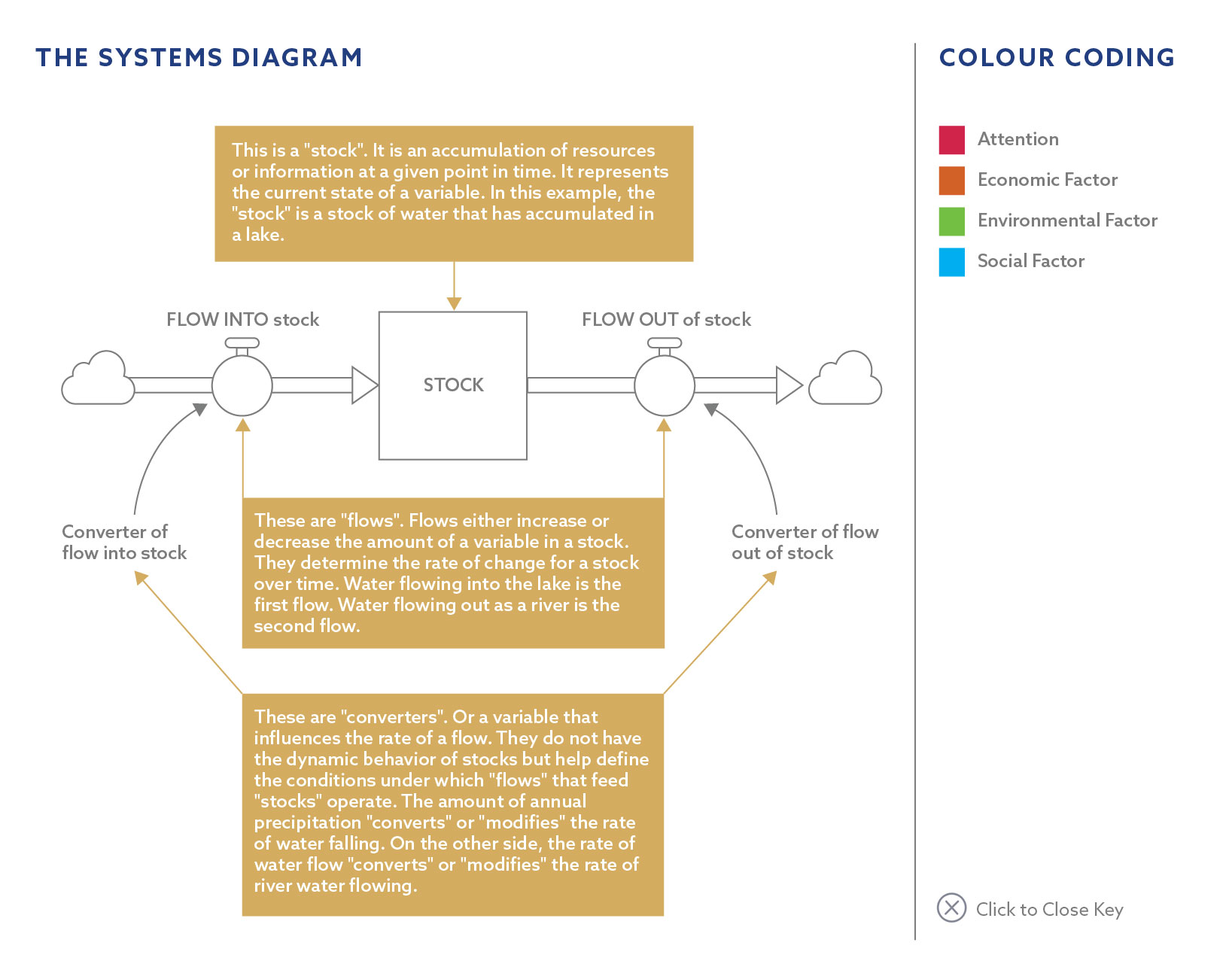
System Map
Animal health:
Livestock health



IN CONCLUSION
PhytoComplexes are a micro-demonstration of exactly what’s needed in a wider sustainability (economic, environmental and social) context. That is, a holistic health approach that prevents problems from surfacing in the first place (mitigation); and addresses them swiftly and effectively when they do (adaptation).
We see clearly that prevention has a far higher return on investment versus paying for treatment while trying to recuperate lost progress while an animal/ecosystem is sick and is struggling to recover.
But prevention can be hard to justify because “What if an animal never gets sick?” “What if environmental degradation never affects my business?” But as every farmer knows, some animals will get sick. And as 99% of scientists know, our environment is getting very sick, and there are no antibiotics for aquifers without water in them, or massive wildfires, or record-breaking heat.
AThe good news is that this approach to advanced PhytoComplexes reminds us that there are powerful mechanisms for systemic improvement that cut across many challenges simultaneously. What it takes is rather than trying to override biological ecosystems, we apply our science to learn how we can support nature’s healthy equilibrium. After all, health is not a single outcome but an emergent property of well-supported systems.